Palm trees play an essential role in West African ecosystems and societies, but most indigenous species are still poorly understood and vulnerable, or even threatened with extinction, as a result of deforestation, overexploitation and climate change. The aim of the Multipalms project is to better document their diversity, biology and uses in order to promote their conservation.
Multipalms, a project supported by the Audemars Piguet Foundation for Trees
The Multipalms project, launched in 2020 in partnership with universities and science institutes in Benin, Côte d’Ivoire and Ghana, and funded by the Audemars Piguet Foundation for Trees, is being implemented in a context of high vulnerability among native palm trees in West Africa.
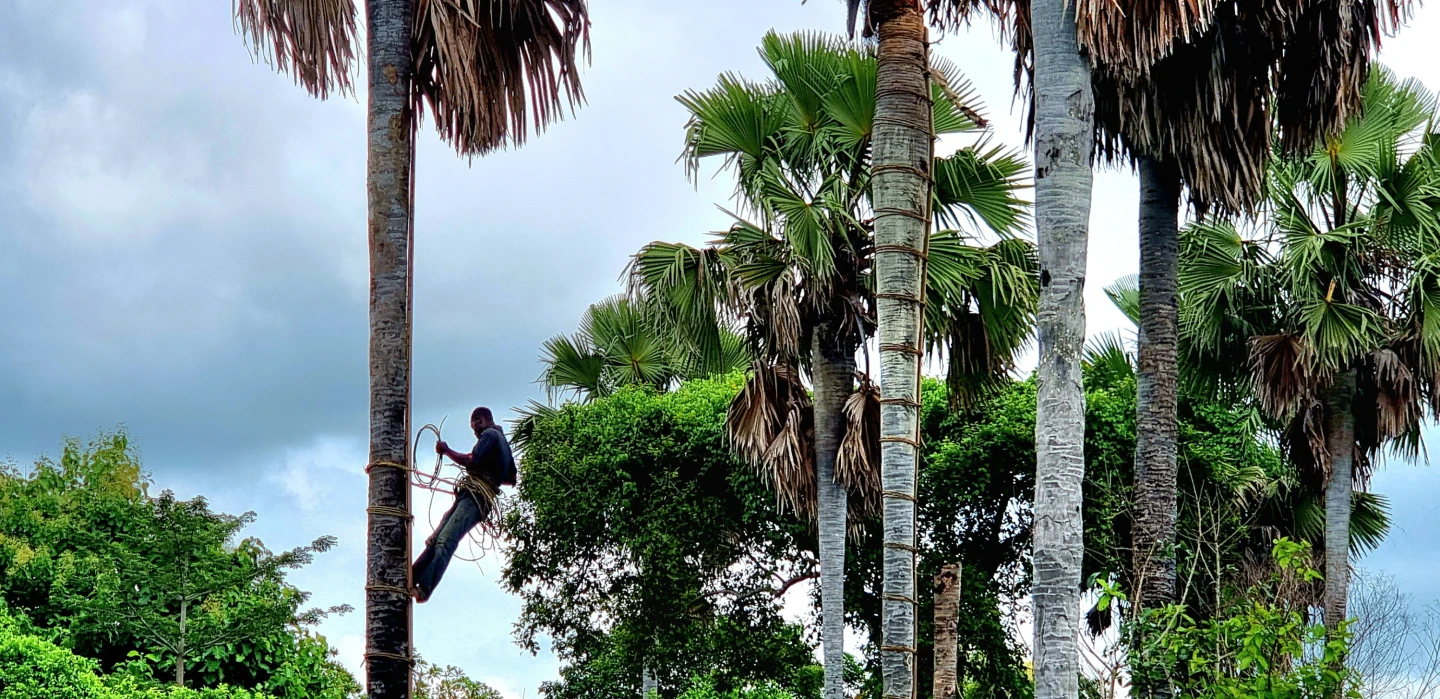
Of the 68 species recorded on the African continent, 38 of which are found in this region, almost 90% still grow exclusively in the wild in savannahs and rainforests. 80% of these species are subject to harvesting, to varying degrees, for cane (rattan), fibres (raffia), sap (palmyra palms, date palms, etc.), fruit (palmyra palms) and many other materials used in construction, protection, traditional medicine and food, as well as for ritual and spiritual purposes.
Their natural regeneration rate is slow, making them particularly vulnerable to over-exploitation, deforestation and the consequences of climate change. At least three of these species are even threatened with extinction if conservation measures are not implemented as a matter of urgency.
With the exception of the oil palm (Elaeis guineensis), the date palm (Phoenix dactylifera) and the coconut palm (Cocos nucifera), West African palms, including palmyra palms (such as Borassus aethiopum), raffia palms (such as Raphia hookeri), doum palms (such as Hyphaene compressa) and the family of rattan palms (Laccosperma, Eremospatha, Calamus, etc.), are still entirely harvested from the wild because of their high socio-economic importance in rural areas, and many are under extreme threat. However, they remain poorly understood from a botanical, ecological and ethnobotanical perspective.
The aim of this project is to document the biology, ecology and uses of West African palms in order to contribute to their conservation and sustainable management by local populations, so that they can benefit from the resources the palms offer for the long term.
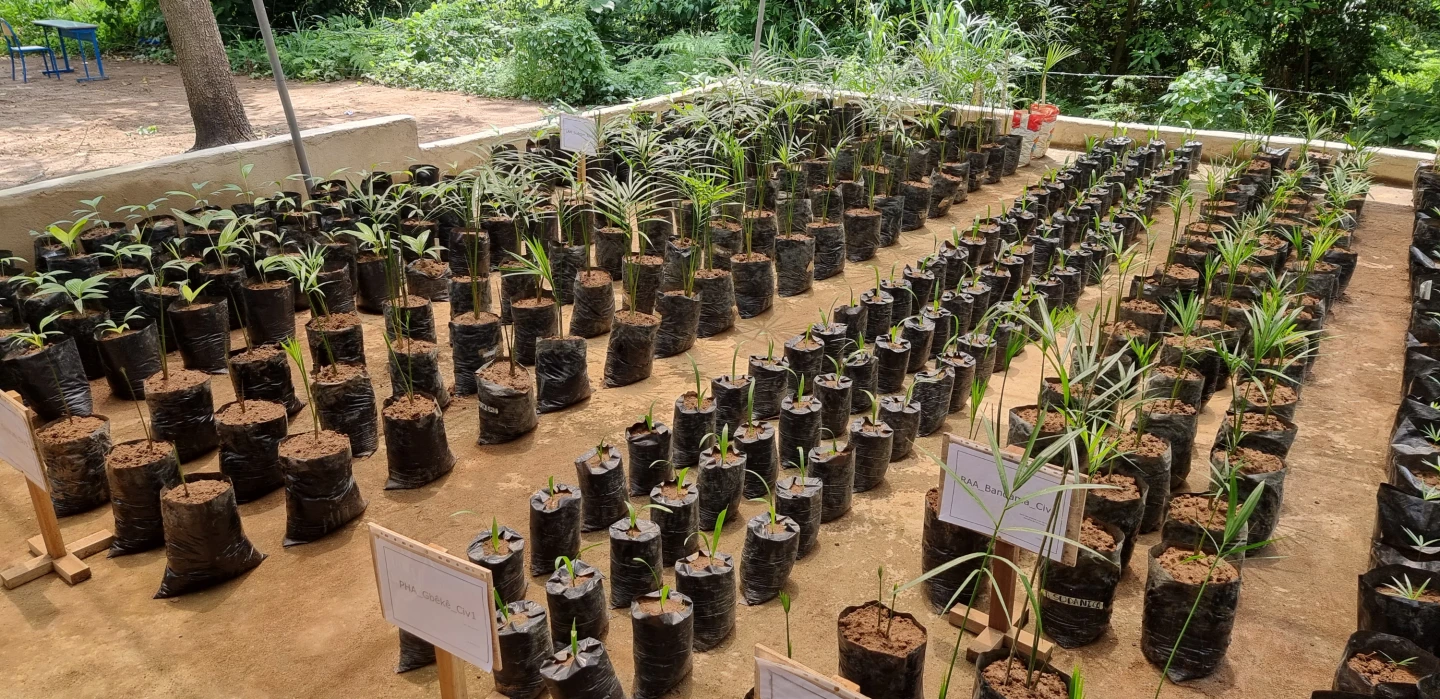
To achieve this, Multipalms aims to increase scientific knowledge, preserve the morphological, ecological and genetic diversity of these species, and develop domestication and propagation programmes, in particular by establishing nurseries and defining and popularising protocols for cultivating and reintroducing the trees into the wild. These actions seek to support reforestation, agroforestry and ecological restoration, while maintaining regional biodiversity and the sustainable economic exploitation of resources for harvesters and craftsmen. The project also aims to train a new generation of scientists capable of continuing and expanding these conservation efforts and their sustainability.
This dynamic has made it possible to forge strong institutional partnerships with the CSRS (Swiss scientific research centre) in Côte d’Ivoire and the national universities of the countries concerned, and to create the NGO PALMS (Plants and Animals Life for Man Survival), which can apply, popularise and share the scientific results of the project.
Outlook and results
Since it was launched, the project has enabled thousands of seeds to be collected in situ (directly from their natural environment), greenhouses and shadehouses to be built in university botanical gardens for experimental cultivation, and the ex situ production and multiplication of plants to be reintroduced into controlled areas.
Reproducible scientific protocols have been developed by the students involved in the project to reduce seed dormancy times, improve germination rates and encourage accelerated seedling growth. Once popularised, these protocols open up new prospects for the various stakeholders in the economic chain, particularly farmers who are often dependent on colonial export crops (cocoa, rubber, teak, industrial oil palms), to multiply and cultivate several useful threatened species.
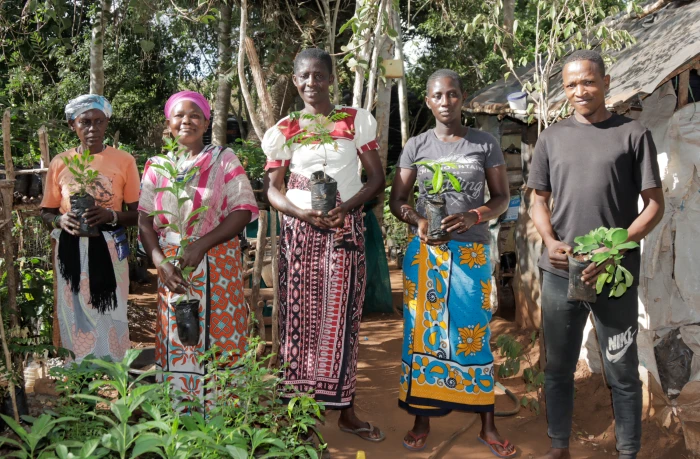
This work is accompanied by the in-depth documentation of the value chains for palm products and by awareness-raising and environmental education initiatives aimed at schools and local user communities (raw material harvesters and artisan processors). The nurseries and shadehouses established by the Multipalms project now serve as educational platforms dedicated to the conservation of endangered palm trees and the preservation of their biotopes, particularly in Côte d’Ivoire and Benin.
Despite the considerable efforts already made in West Africa, the in-depth documentation of the biology and ethnobotany of the species concerned remains a colossal task on a continent-wide scale. This is why, in the summer of 2025, the Multipalms project also initiated the creation of AFNOPS (African Network of Palm Scientists), a scientific network that coordinates the research work carried out by several teams affiliated to African universities. This network aims to promote botanical, ethnobotanical and conservation studies of palm species across the African continent, including Madagascar.
The aim of coordinating these efforts is to explore ways of ensuring the sustainable use of the resources offered by palm trees, which are of vital importance to local populations. These efforts are supported by the IUCN (International Union for Conservation of Nature) and the BGCI (Botanic Gardens Conservation International), both international umbrella organisations whose African headquarters are located in Nairobi, Kenya.
In addition to applied research, Multipalms plays a key role in building regional scientific capacity by training a new generation of researchers at master’s and doctoral level in Benin, Côte d’Ivoire, Ghana and beyond (Cape Verde, Sierra Leone, Ethiopia, etc.).
By combining science, conservation and traditional knowledge, the project is helping to preserve plant biodiversity and promote a sustainable model for managing palm trees in West Africa, to the benefit of both local people and ecosystems.
Multipalms awarded the Eremitage Prize
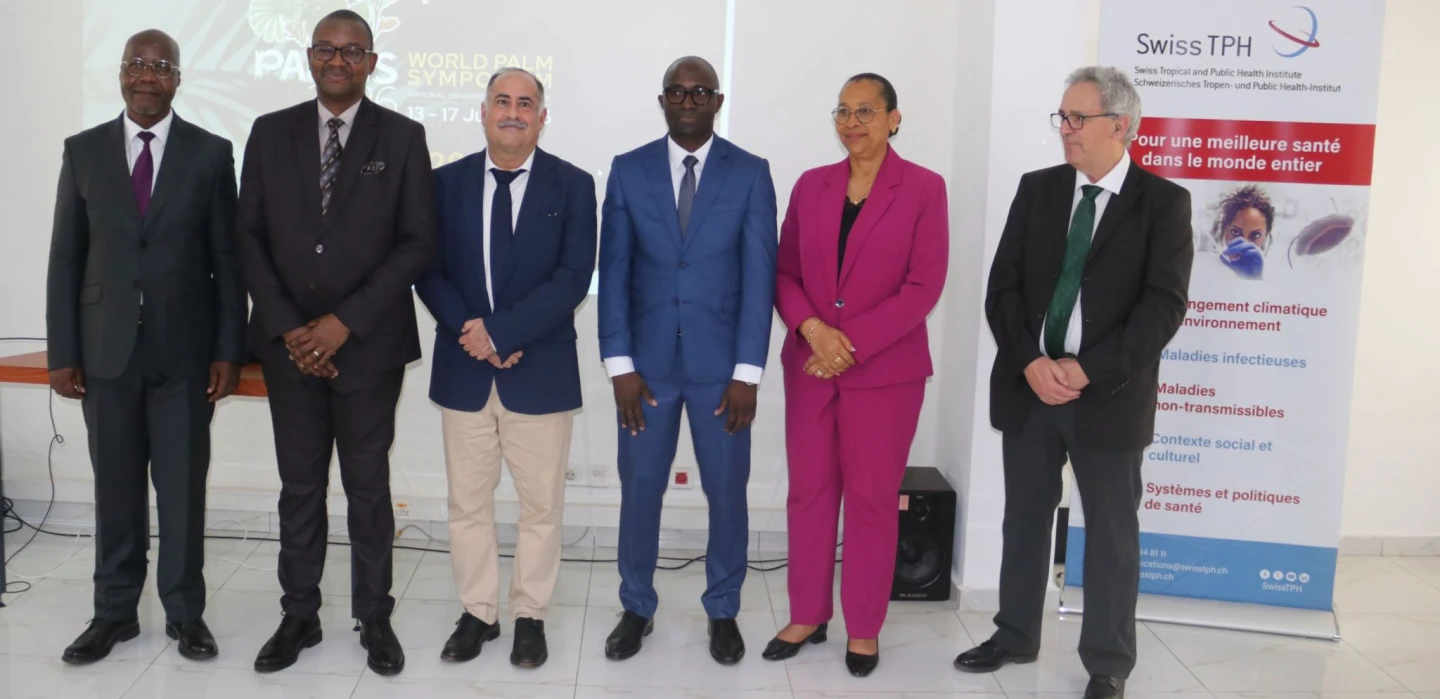
On Thursday 26 February 2026, representatives of Multipalms, winner of the 2025 Centre Suisse de Recherches Scientifiques (CSRS) - Eremitage Prize for Scientific Research in Partnership, received its award at the CSRS headquarters in Côte d’Ivoire. The team was made up of Dr Doudjo Ouattara, lecturer and researcher at the Université Nangui Abrogoua (UNA), coordinator of the Multipalms project in Africa, and Fred Stauffer, curator at the Geneva Botanical Garden, scientific manager of the project in Switzerland.
The prize was awarded for “15 years of studying palm trees in West Africa”. The jury noted that the research carried out on the botany and diversity of palms in West Africa had led to several scientific publications, the training of students from bachelor to doctorate level, and the establishment of an environmental training centre, the “Palm Garden” in Divo (Côte d’Ivoire), dedicated to the conservation of these species. It should be noted that the “Palmiers solidaires” project, which was behind the educational palm garden in Divo, was supported from 2015 by the Fonds de Coopération and the Botanical Garden of the City of Geneva.
Created in 2001 to mark the fiftieth anniversary of the CSRS, this prize is awarded every two years by the Fondation pour le CSRS and, since 2011, has received the financial support of the Basel-based Eremitage fund in Switzerland. It aims to honour researchers for excellence in their contributions to research in partnerships between science institutions in Switzerland and those in Côte d’Ivoire and/or other West African countries. It is also awarded for high-level work leading to major publications or notable innovative applications.
According to the management of CSRS-CI, this prize is a symbol of integration and of the will for collaboration and collective discovery – in other words, a project where partnership is essential.
Palmiers solidaires, Multipalms and all the dedicated teams in Africa and Switzerland are honoured to receive this award. They thank the Audemars Piguet Foundation for Trees for its financial support.
Didier J. Roguet is an ethnobotanist, Honorary Curator of the Geneva Botanical Garden, and an Officer of the Order of Merit of Ivorian National Education.
This text was written in collaboration with Fred Stauffer, curator and palmologist at the Geneva Botanical Garden, and scientific lead for the Multipalms project in Switzerland.
Carousel image captions:
1. Palm wine harvesting from ron palm (Côte d’Ivoire)
2. Palm tree production nursery
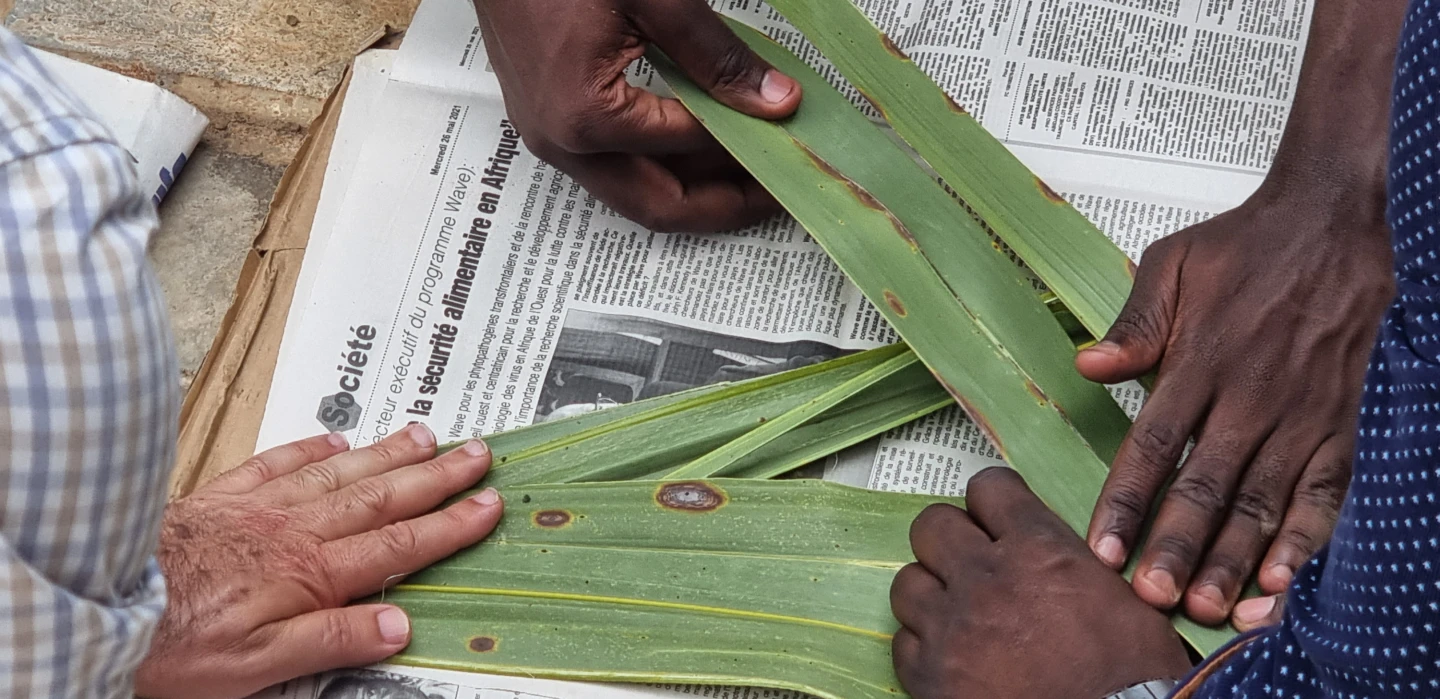
3. Pressing of a palm sample
4. Eremitage Prize award ceremony (CSRS)